Vault Health Life Science
Designing a 0-1 decentralized clinical trial platform
Founding Product Designer
0-1 PRODUCT DESIGN
HEALTHCARE
COMPLEX SYSTEMS
0-1 DESIGN SYSTEM
Summary
Project Overview
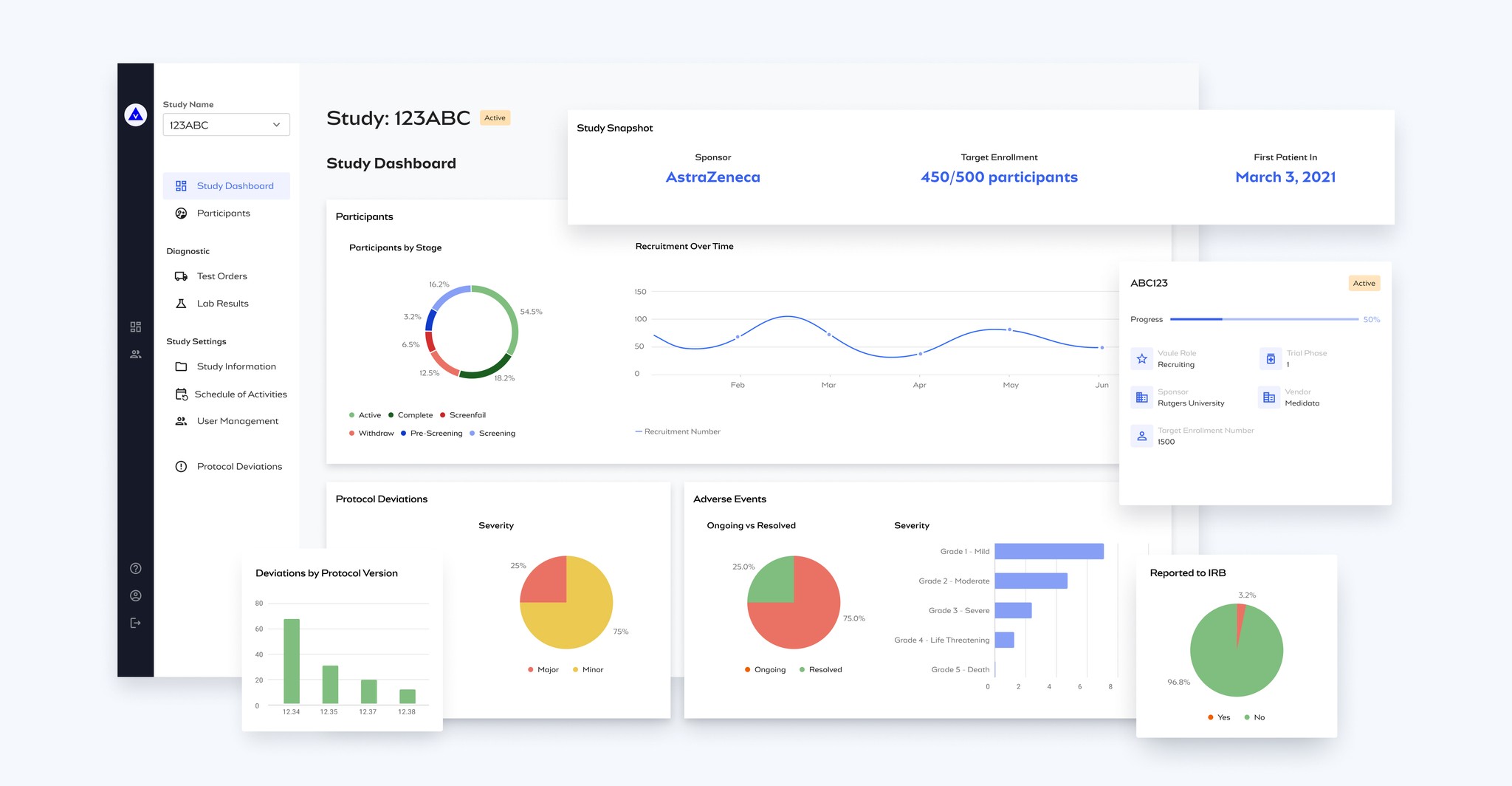
Vault Health Life Science set out to simplify the complex operations behind decentralized clinical trials—coordinating participants, visits, diagnostics, equipment, and strict clinical protocols across distributed teams.
We designed a unified platform to help clinical teams manage these workflows in one place. During the project, our prototype helped support a major industry partnership, and the product was acquired by Science 37 shortly afterward.
My Role
As the founding product designer, I led the product experience from early product definition through MVP design, working closely with 4 product managers, a UX researcher, and engineering, clinical, operations, and business teams.
I also established the product's first design system to support consistency and collaboration across 14 engineering teams (~120 engineers).
Highlights
0-1 product definition
Helped translate an emerging business opportunity into a defined MVP, identifying core users, workflows, and product priorities.
Complex healthcare workflows
Translated clinical protocols and operational constraints into understandable workflows for scheduling, participant management, diagnostics, and study management.
Business-critical prototyping
Designed a high-fidelity interactive MVP prototype under a tight deadline that helped support a major industry partnership.
Design at scale
Established the product's first design system, creating a shared foundation across 14 engineering teams.
Product Preview
The MVP brought three core clinical trial workflows into one experience: scheduling, protocol management, and diagnostics.
01 — Defining the right product
From a broad opportunity to a focused MVP
Decentralized clinical trials involve a complex network of sponsors, clinical research teams, participants, laboratories, diagnostic providers, and logistics partners. When we started, the opportunity was broad: many of these workflows were fragmented across different systems and processes.
Our first challenge wasn't designing an interface. It was deciding where a new platform could create the most value—and what we should build first.

Understanding the existing landscape
To understand how clinical trial teams were working today, I reviewed around 10 EHR and clinical trial platforms.
Most were comprehensive but highly complex, with teams often relying on only a subset of their functionality. This helped shape an early product principle: rather than replicate an all-in-one clinical system, we would build a more focused experience around the workflows our users needed most.
Identifying our primary users
Through early research and conversations with clinical and operational teams, we identified three key roles involved in the workflows we were exploring:
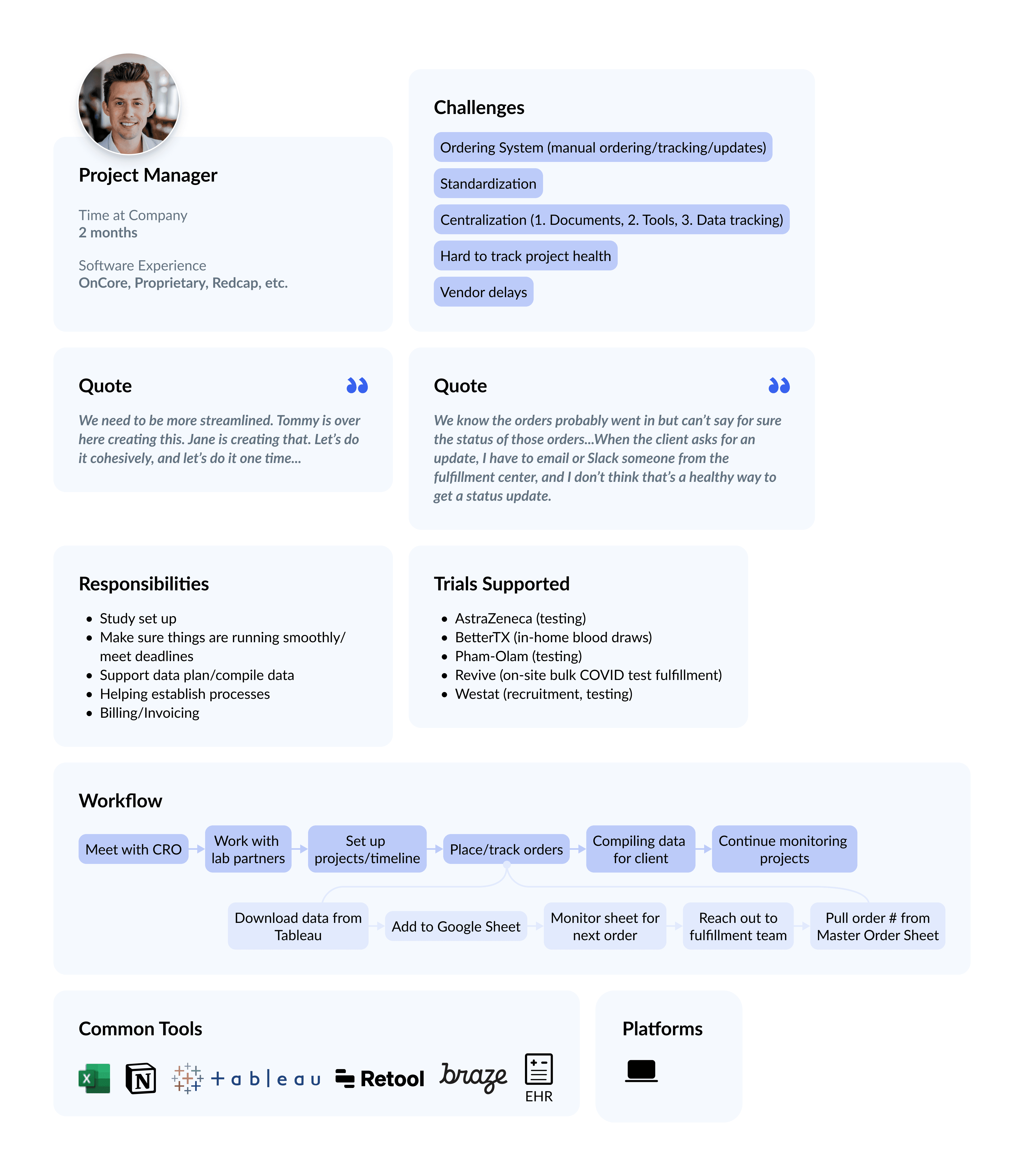
1. Clinical Project Managers (CPMs)
Oversee studies at the program level, monitoring progress, coordinating teams, and keeping trials aligned with protocol requirements.
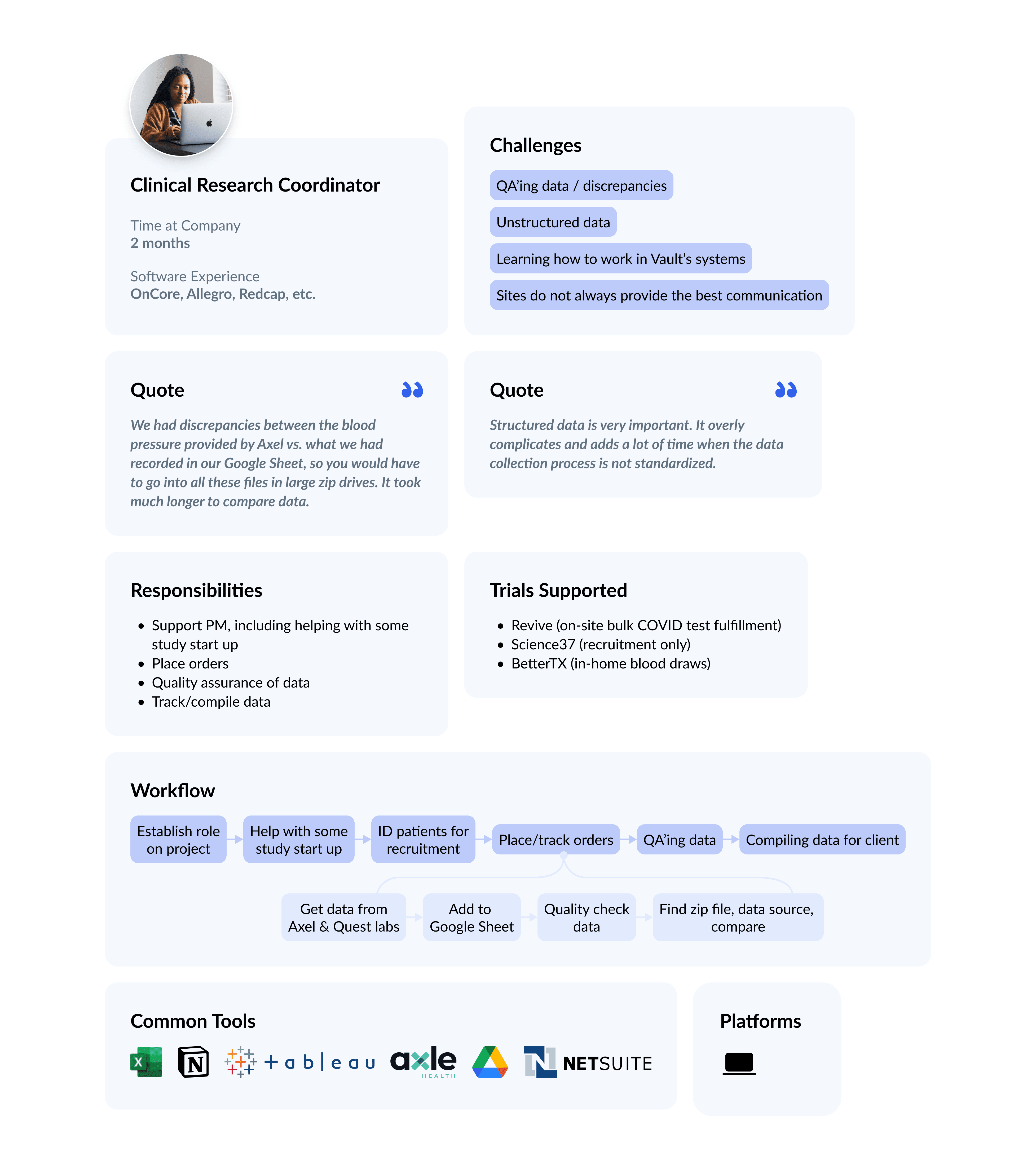
2. Clinical Research Coordinators (CRCs)
Manage the day-to-day execution of studies, including participant visits, scheduling, diagnostics, and protocol-related tasks.
3. Healthcare Providers
Nurse practitioners conducting in-home visits who needed access to participant information and clinical documentation.
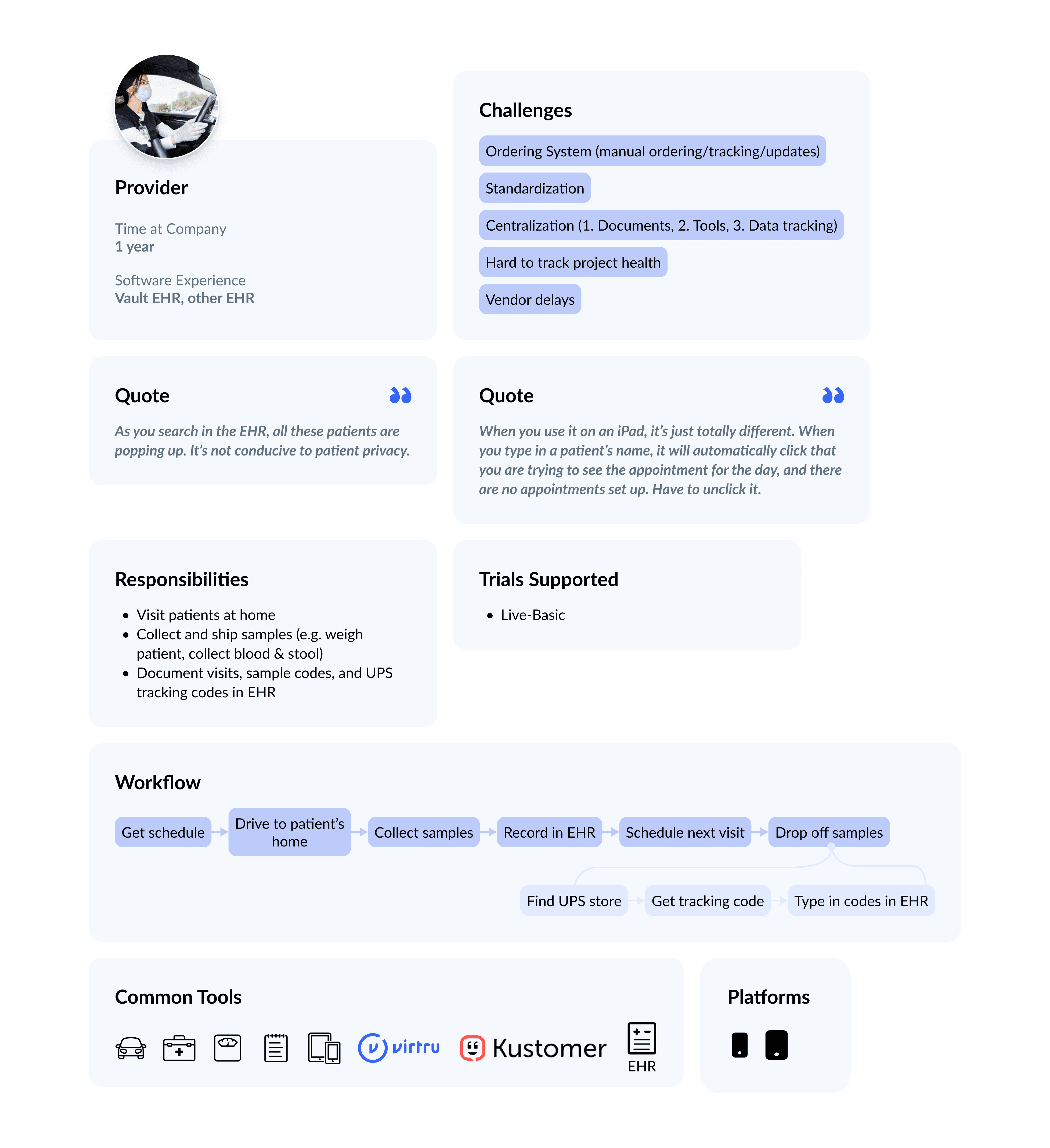
As we examined these workflows more closely, we realized we didn't need to solve for all three roles in the new platform. Vault already had an internal EHR that supported providers, while CPMs and CRCs relied on fragmented tools to coordinate the operational side of a trial.
Finding the highest-value workflows
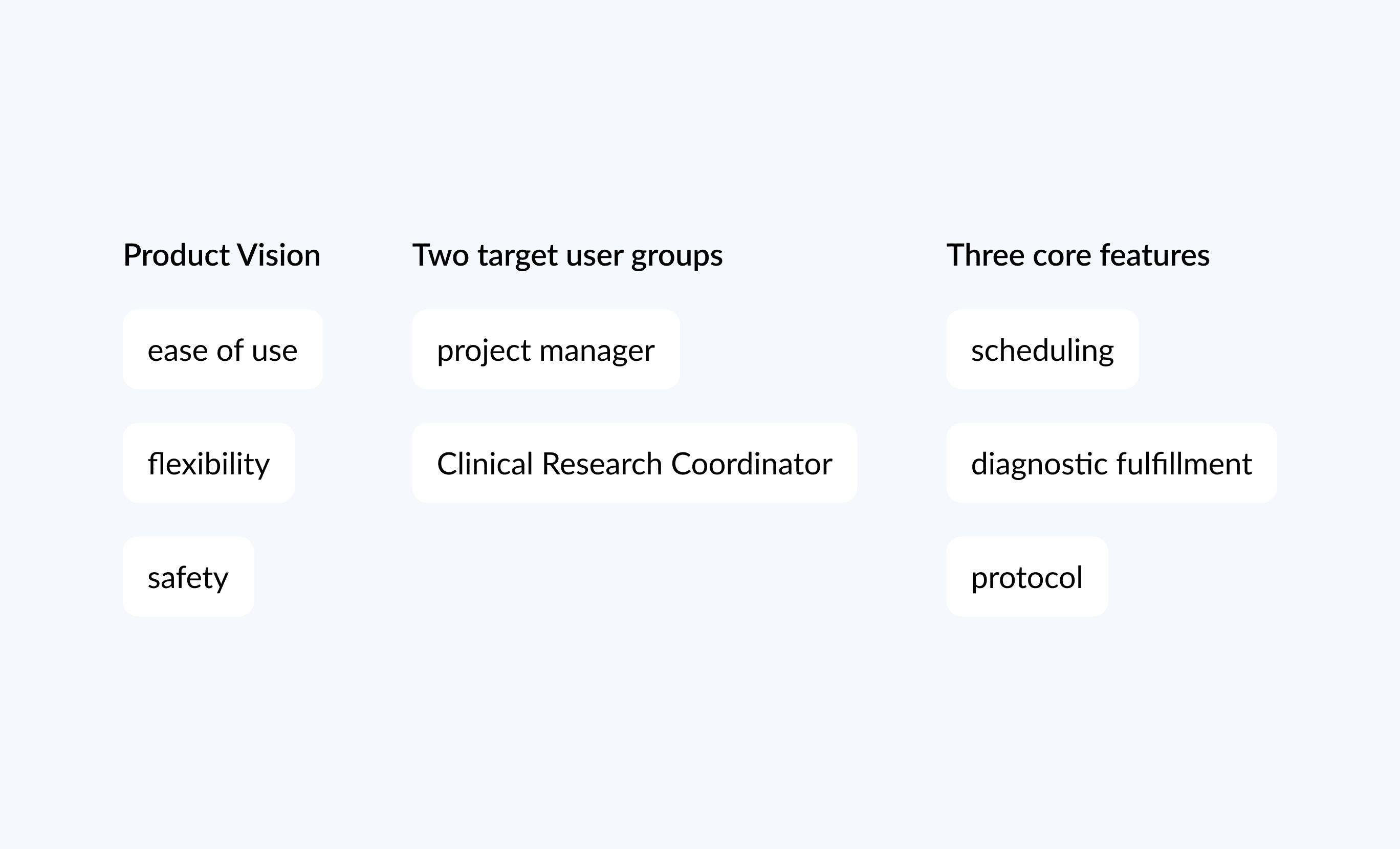
Focusing on CPMs and CRCs gave us a clearer center of gravity for the product. Three areas emerged as priorities for the MVP:
Participant & study management
Give teams a shared view of participants, study progress, and operational status.
Scheduling & protocol management
Translate complex clinical protocols into actionable schedules while helping teams stay within required visit windows.
Diagnostics
Coordinate test orders and results as part of the participant journey rather than across disconnected systems.
Key Insights
02 — Designing the MVP under a critical deadline
A partnership opportunity accelerated the timeline
Shortly after we defined the initial product direction, Vault had an opportunity to pitch the platform to a major clinical trial industry partner.
The opportunity came with an ambitious timeline: we had roughly one week to turn our early product direction into three high-fidelity prototypes demonstrating scheduling, protocol management, and diagnostics.
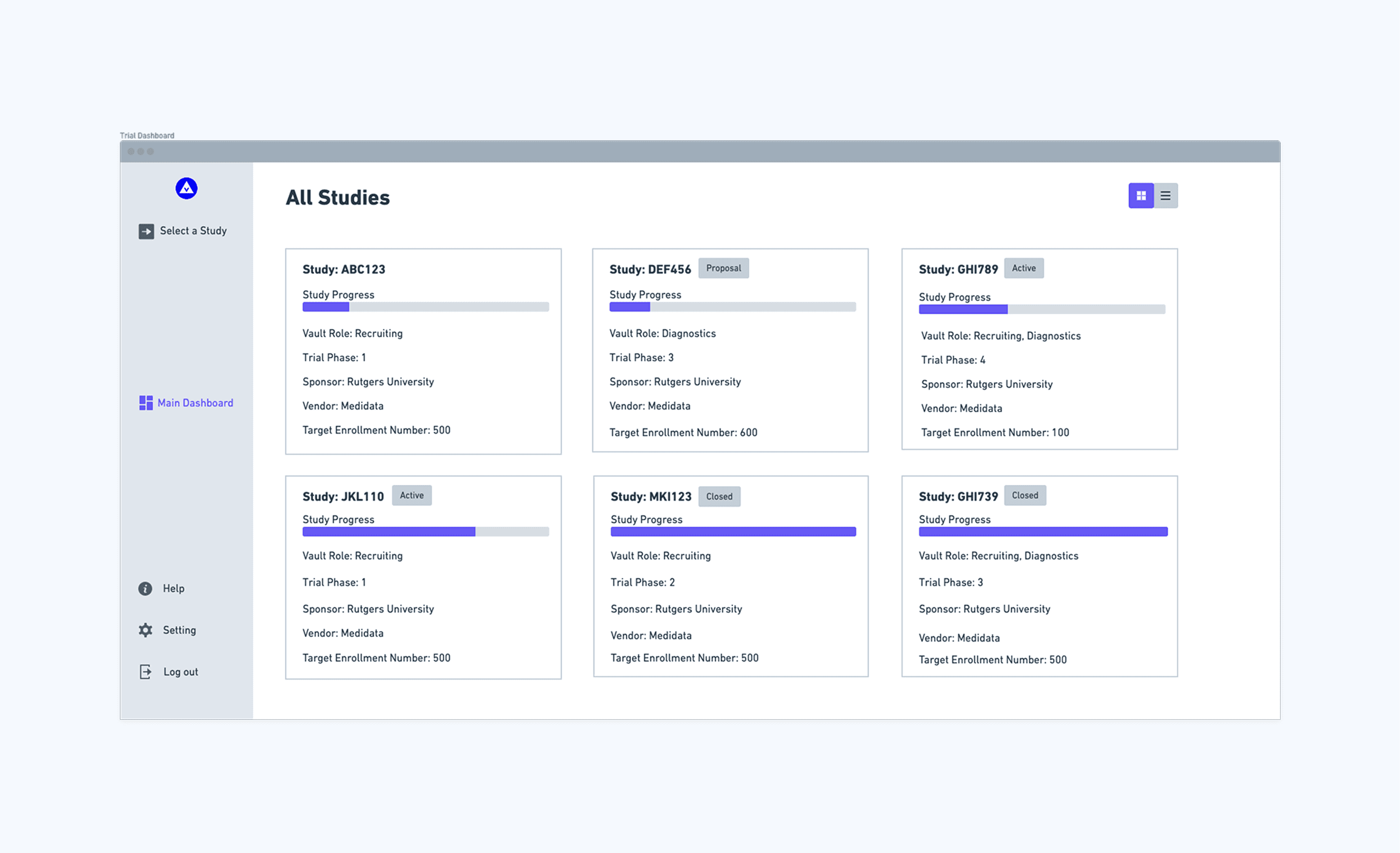
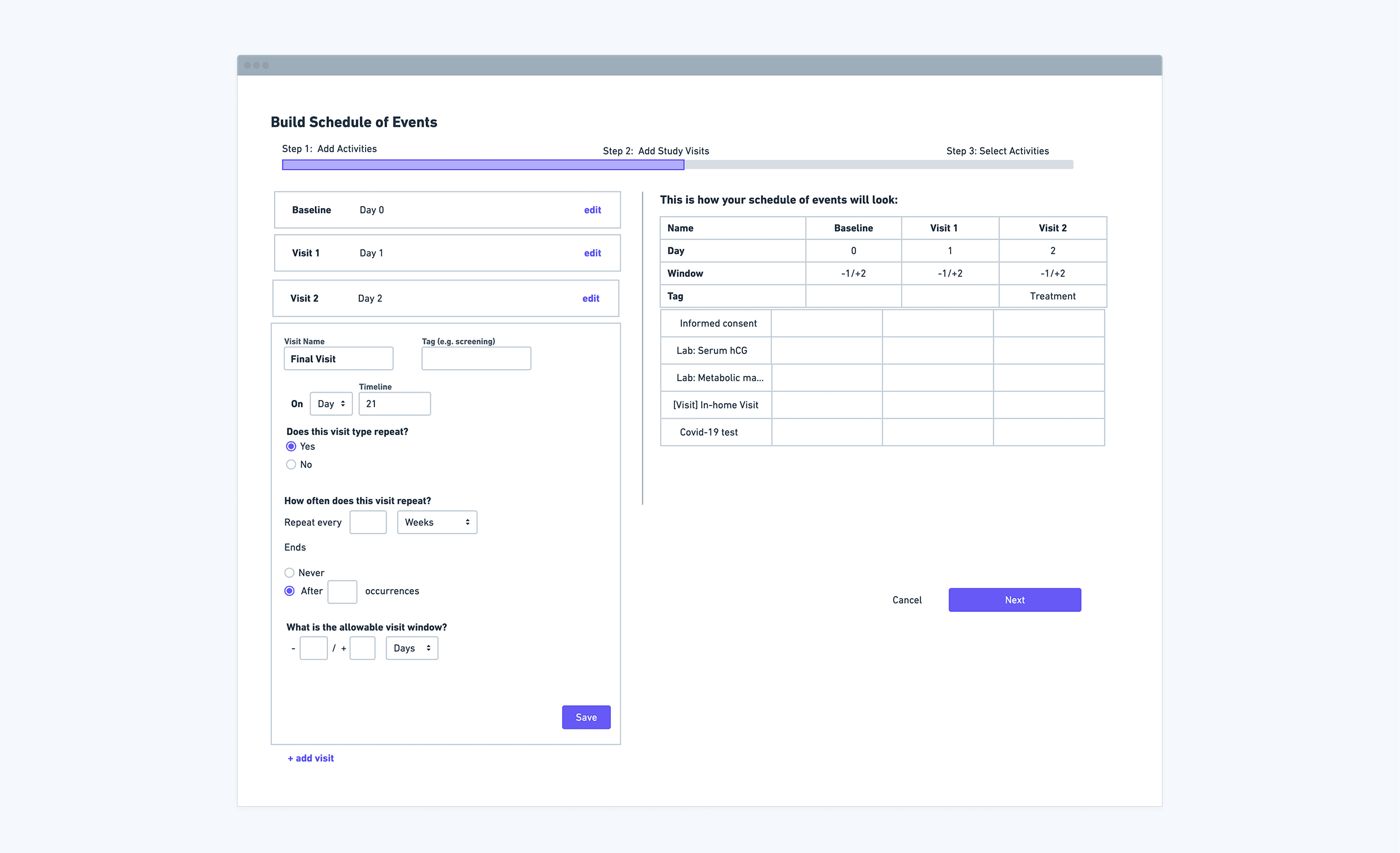
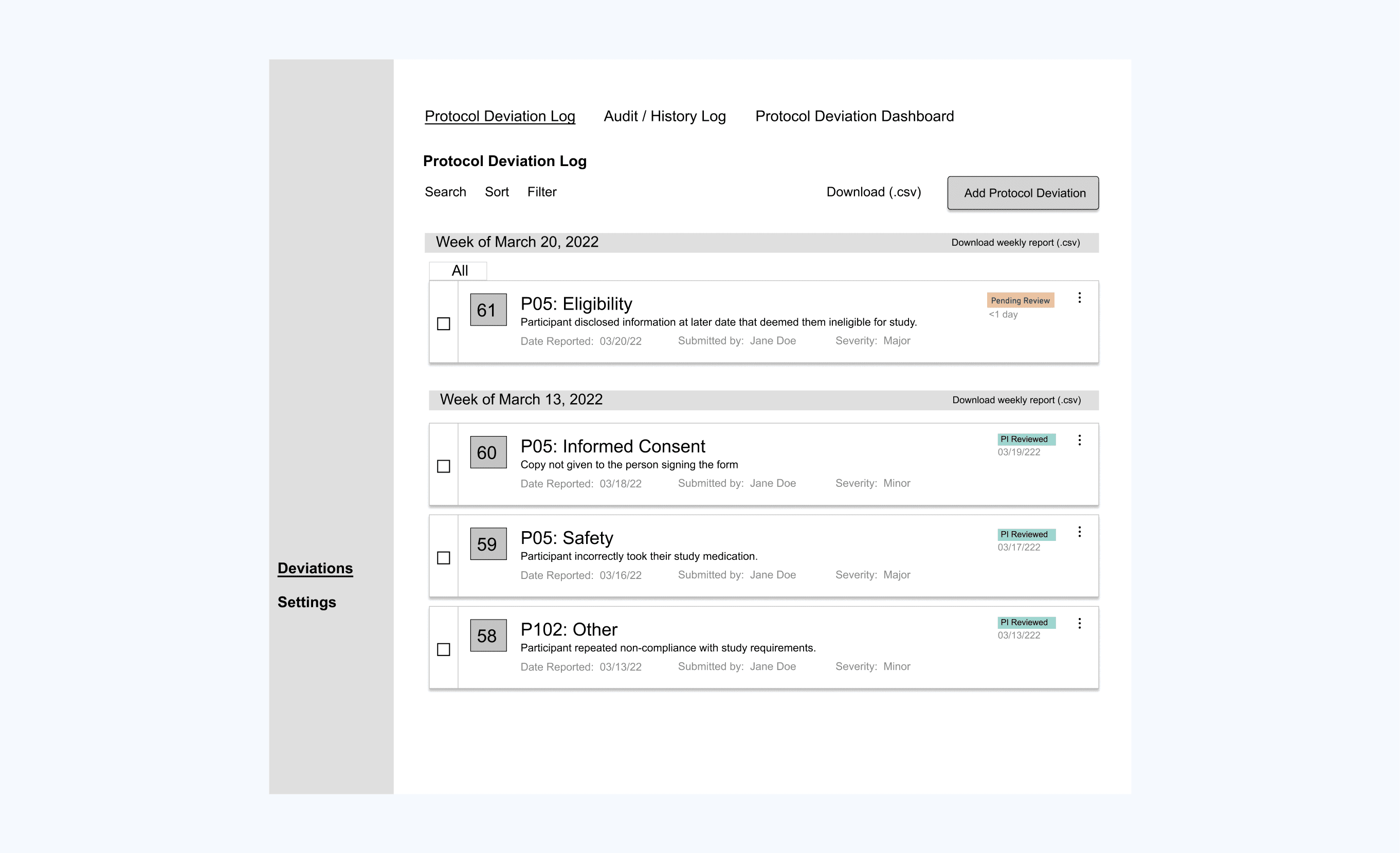
Given the tight timeline, our team spent three days defining the core functionality for each product area. We explored multiple wireframe directions and distilled each experience into 5–6 key screens, giving us a focused foundation for the prototypes.
Selected team wireframes
Designing systematically to move faster
As the sole product designer, I needed to move quickly while making a complex, still-evolving product feel coherent and credible.
To work at that speed, I couldn't design every workflow from scratch.
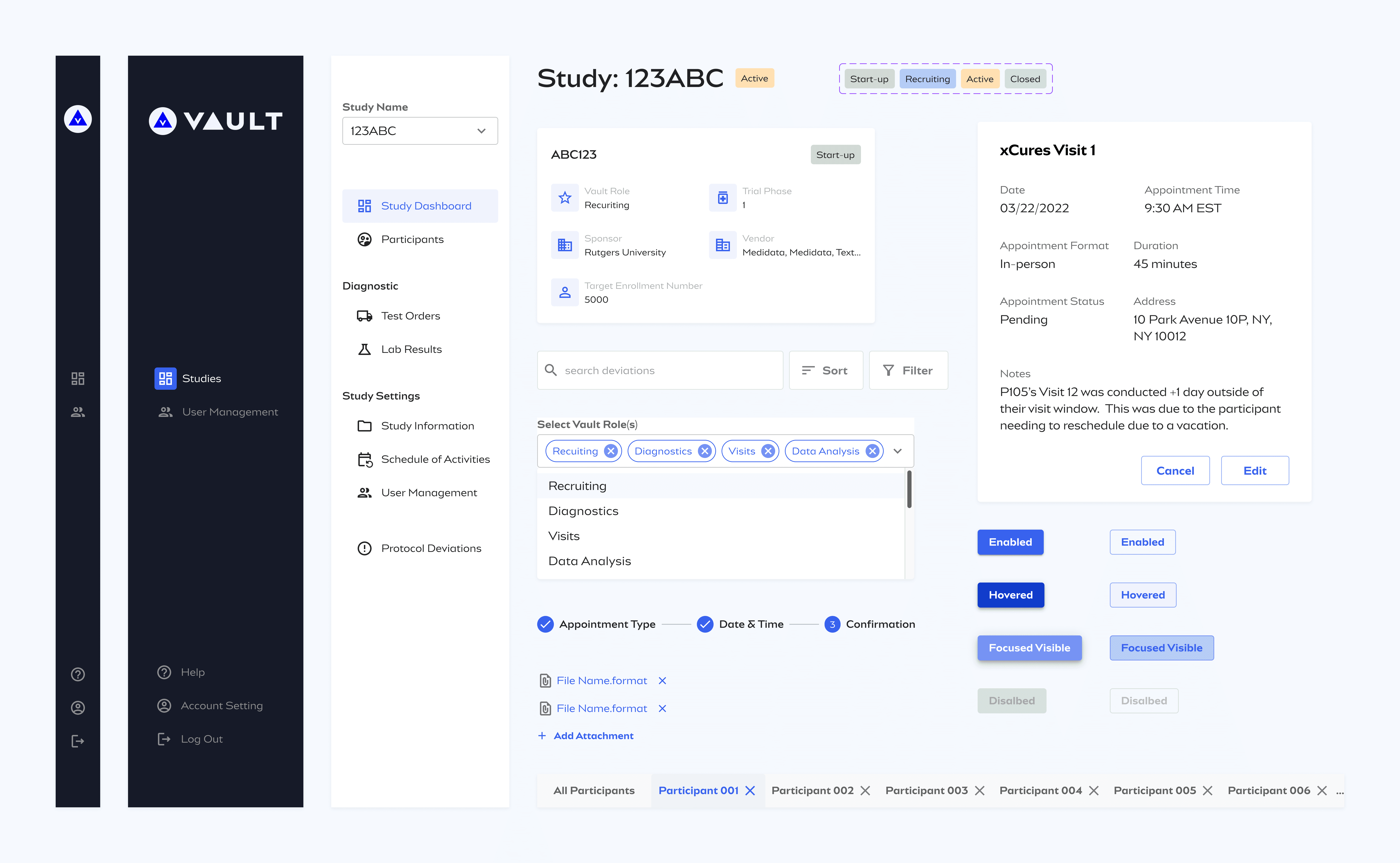
I established the product's first design system, creating reusable foundations and components that could be assembled and adapted across the three core experiences.
The system helped me move rapidly from early concepts to high-fidelity prototypes while maintaining consistency across a product that was being defined in parallel.
It also created a shared design foundation that could support collaboration across our growing product and engineering organization.
Selected components from Vault design system
Deep dive — Schedule of Activities
Turning a clinical protocol into an actionable schedule
The original protocol table coordinators used to schedule appointments
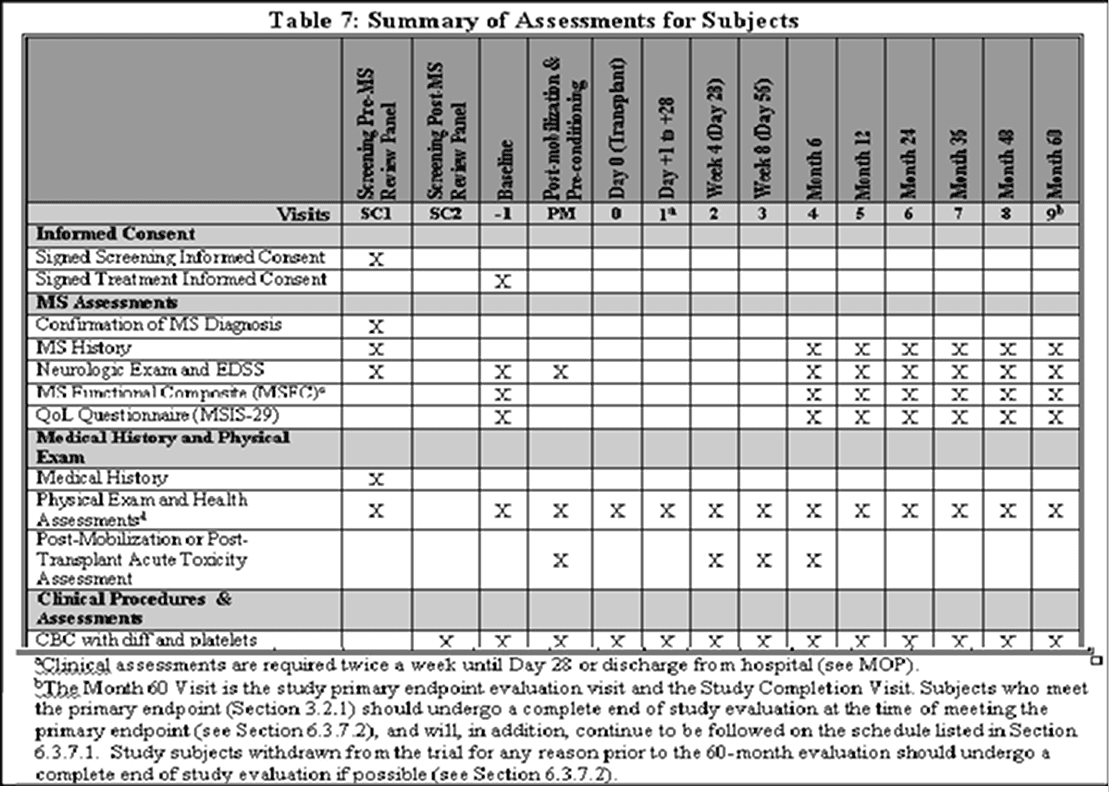
Designing the Schedule of Activities
We introduced a Schedule of Activities (SoA) to translate protocol requirements into a structure the platform could use for participant scheduling. The goal was not to replace clinical judgment, but to reduce repetitive coordination work and make complex protocol requirements easier to follow.
At the study level, clinical teams could define visits, required activities, and allowable timing windows based on the study protocol.
Once a participant enrolled, the system combined their start date with the study's SoA to automatically generate a participant-specific visit schedule.
Clinical protocol → Schedule of Activities → Participant start date → Automatically generated visit schedule
Instead of repeatedly interpreting the protocol and calculating visit dates for every participant, teams could establish the study structure once and use it as the foundation for ongoing scheduling.
Schedule of activities prototype
What the design enabled
1. Less manual calculation: Configure protocol requirements once rather than repeatedly calculating schedules for individual participants.
2. Greater visibility into protocol constraints: Incorporate allowable visit windows directly into scheduling.
3. Better coordination of dependencies: Surface upcoming appointments and equipment-shipping requirements in the workflow.
A key business win
Bringing the MVP together
Together, the prototypes brought three core clinical trial workflows into a unified experience:
Scheduling
Turn protocol requirements into actionable participant schedules.
Protocol management
Help teams configure and manage the structure of a clinical study.
Diagnostics
Coordinate diagnostic activities and information as part of the participant journey.
But a successful business pitch didn't mean we had validated the product with the people who would actually use it.
Before moving into development, we wanted to test our assumptions with clinical trial teams.
What we learned
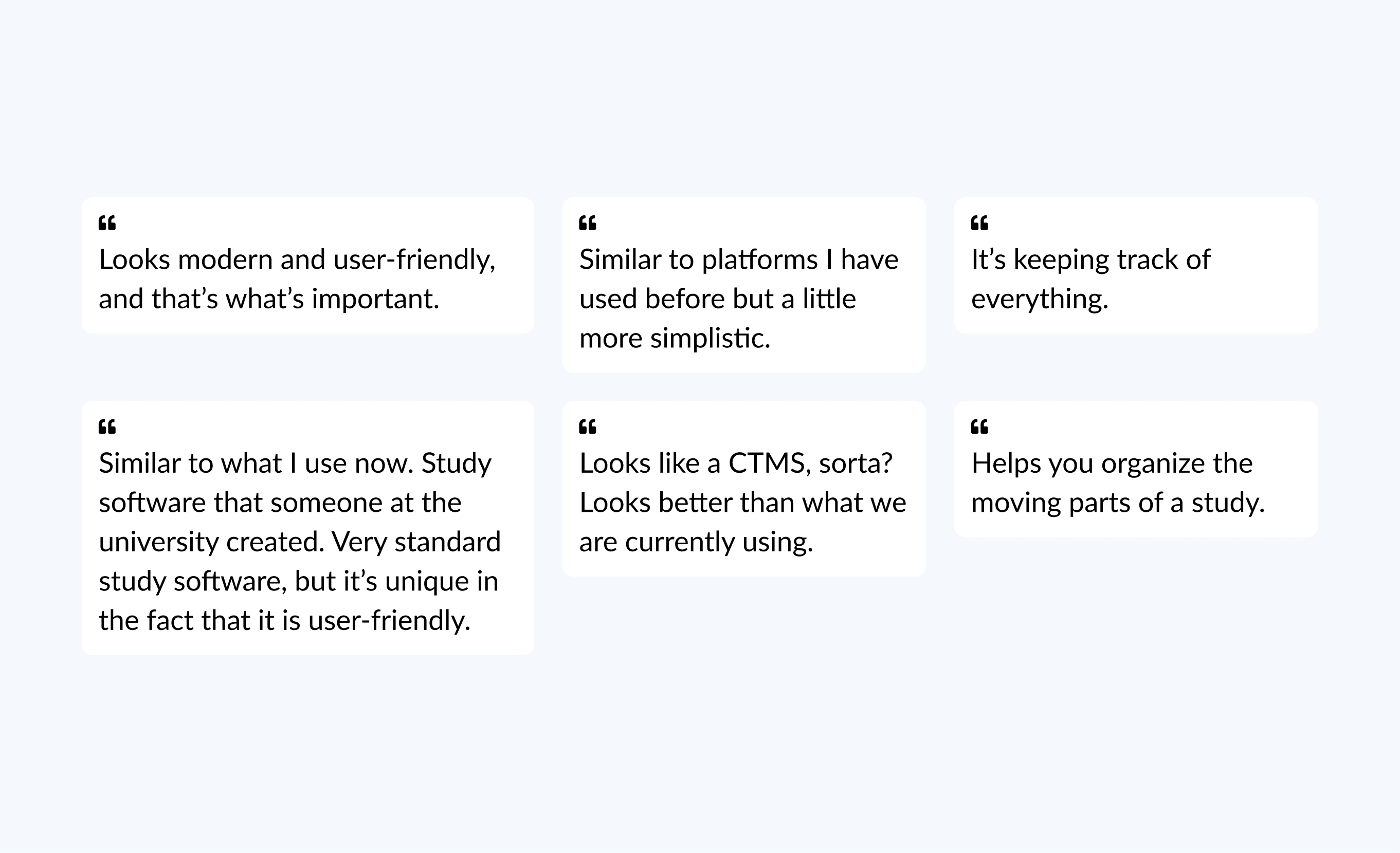
The overall response was encouraging. Participants found the experience intuitive and easy to navigate, and responded positively to having previously fragmented workflows brought together in one place.
Where we needed to improve
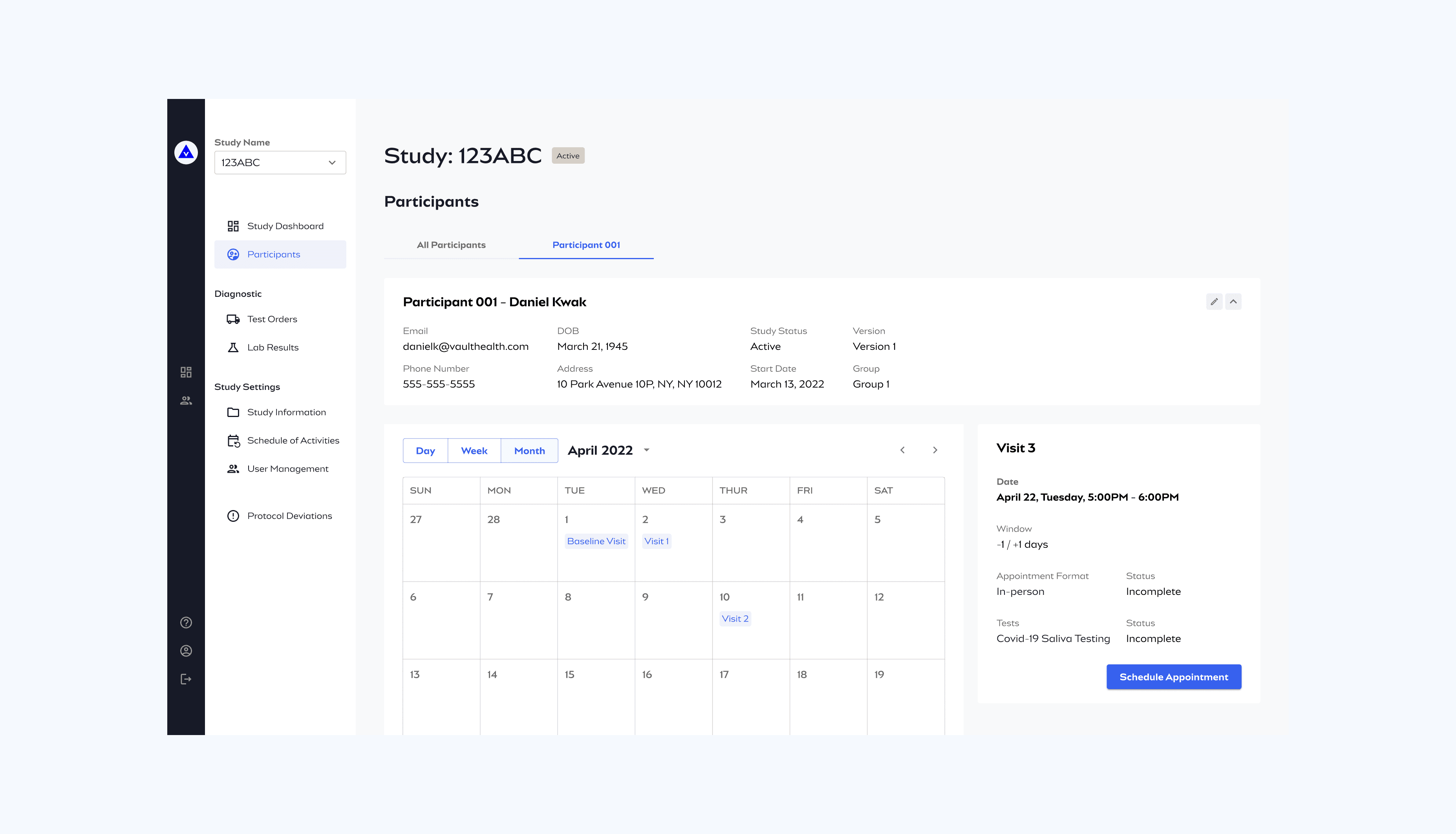
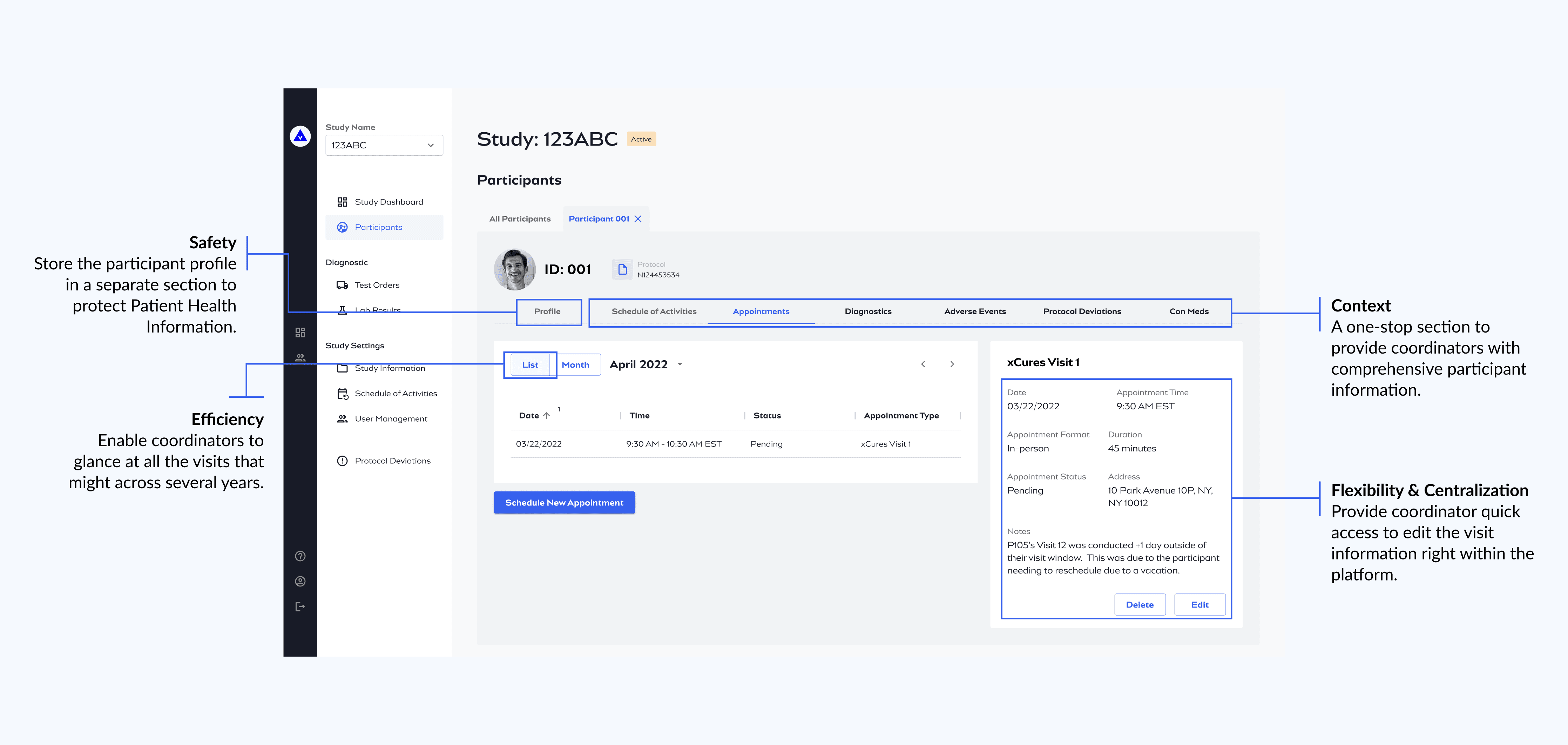
At the same time, testing revealed important opportunities to improve how coordinators accessed participant information and managed visits over the course of a study.
Rather than treating the prototype as a finished solution, we used those findings to refine the experience before development.
Participants page before
Participants page after
Reflection
Vault changed how I think about designing complex products.
The goal isn't always to make complexity disappear. It's to understand which complexity users need to see, which the system can handle for them, and where human judgment still matters.
That principle has stayed with me: good product design isn't about simplifying everything—it's about making the right things understandable and actionable.